Thursday, 6 January 2011

Gardening and Self-Sufficiency, Honey Bees and Fish

Honey Bees


It is ironic how nowadays city beekeepers prosper more than their country cousins. The cities have caused a poverty of country wildlife by incessant taking of land for roads, building and for more food production. There are now so few areas of uncultivated land and wildflowers that many county beekeepers despair, while city gardens are filling with expensively planted flowers. Urban beekeepers also find that the shelter and warmth from all the buildings extends the honey season by many weeks. 
Bees are an ideal occupation for someone with a small garden and who is good at slow, gentle movements and taking methodical care. The amount of work is not great, but it must be done at the right date and often at the right time of day so it suits the retired. A modest investment will set you up with honey and beeswax for life. You can also spend a lot of time just watching bees. If you have the space, you can help them by planting the right sort of flowers, and thereby increase the quality and flavour of your honey. Bees do not use their sense of smell much and tend to go for blue or white flowers, though other colours are not excluded.
Trees and shrubs have also come to depend on bees, and limes are well known for filling hives with honey. 
Most members of the following families are good for bees, but avoid sterile, double flowered varieties:
Acer, Aesculus, Alnus, Berberis, Betula, Caragana, Catalpa, Ceanothus, Cercis, Chaenomeles, Cistus, Cotoneaster, Crataegus, Daphne, Eleagnus, Escallonia, Fagus, Fraxinus, fuchsia, Hedera, Hypericum, Ilex, Laurus, Liquidambar, Liriodendron, Malus, Mespilus, Olearia, Perowskia, Physiocarpus, Populus, Potentilla, Prunus, Pyracantha, Quercus, Rhamnus, Rhus, Ribes, Robinia, Rosmarinus, Rubus, Salix, Senecio, Skimmia, Sorbus, Spiraea, Symphoricarpus, Syringa, Tamarix, Tillia, Ulex, Viburnum and Weigela.
In the vegetable and fruit garden, leave unwanted brassicas, leeks and onions to go to flower as bees love these. Strawberries, especially the alpine ones, are always popular, but raspberries, blackberries and their hybrids are favourite. Clovers sown in sward and as groundcover or green manure are one of the biggest yielders of honey. On farms, field bean and oilseed rape are the largest sources. Sweet basil, summer savory, lemon balm, and the mints are all much loved. On a cost effective basis, the mints are probably the best for large areas as they spread so well.


... and Fish

Well, why not? I have goldfish in my water butts to keep down the gnat larvae and they breed up and produce a surplus.
Unfortunately goldfish are not tasty and are bony, even the cats refuse them and most other cold water fish that could be kept are not great meals. Tasty fish like trout need sparkling running water. However, they used to have fish ponds in the Dark Ages and in the East, so it may be worth pursuing. Certainly many cunning schemes have centred around alternating sunken livestock grazing meadows with ponds every couple of years. Fish and livestock have different parasites; the fertility left in the mud grows good grass; and, when flooded, grassland produces rich food for fish.


Related articles: 


Gardening and Four-Legged Friends
Gardening and Self-Sufficiency


Related sites:


www.gardeninginfozone.com 
www.yourgardeninginfo.com 
www.thegardeningbible.com


Saturday, 1 January 2011

Sharing our garden with backyard friends

Sharing our garden with backyard friends 
Along with the satisfaction of growing your own food and flowers, the pleasure of real freshness and flavour, the greatest joy of successful organic gardening is spying a rare butterfly, a grass snake or a dragonfly by your pool. All the natural fertility you make in your soil, the many forms of life it supports and the inviting and sustaining habitat you create will attract the wildlife we all love and wish to see. These are disappearing in the wild and our aim is to preserve and bring them to strength again within our bounds. We may lose some crops to them, but in return they give us pleasure, control many pests and improve our fertility. 
Surely we can afford to share a little of our and nature's surplus with them? But not only may we have wild friends who live with us, we can have pets and livestock. These latter are a cunning way to convert medium-grade household and garden wastes into high-grade food and also high-grade compost material. By feeding animals leftovers and any other edible items that would otherwise go to waste, we can recycle the food value back as eggs, meat or milk. 
This is also a way of converting the surpluses of summer into a more storable form. Don't be put off by the added responsibility of looking after animals – having chickens is much easier than keeping a cat or a dog – and their eggs are far better! 


Related sites:


Pot Pourri and Strewing Herbs

Household products, pot pourri and strewing herbs
It is worth noting a few of their more handy uses around the home, though. Handfuls of fresh or dried herbs wrapped in cloth and tied under the hot tap create a wonderful and relaxing bath to finish off a hard day in the garden. Pot pourris are air fresheners made from dried herbs; special recipes are quoted needing exotic ingredients, but any dried herb in a bowl will eliminate unpleasant scents and give off its own aroma. 
My favourite is based on lemon verbena leaves with some rose petals, eau de cologne mint and 'Herba Barona' thyme. Try whatever you have available. Dried herbs tied in bags keep pests out of drawers and cupboards, giving them a pleasant smell. Lavender is the best base for this. 
Strewing herbs are better than pot pourri for scenting a room and ideal for floor coverings in potting sheds, where they give a pleasant – if dusty – atmosphere. They tend to get carted around on feet in the house. I prefer mints and cotton lavender for working areas, hyssop by the wellie rack. For the summerhouse and in my car footwells, thick layers of lavender create a tranquil atmosphere. In the fruit store I use southernwood to give a clean scent and drive away pests. The barbecue can scent the air and drive away gnats and flies if small bundles of fresh or soaked dried herbs are added to the coals. They can flavour, and smoke, the food as well.


Related sites:


A Better Salad and Kohlslaw


Bored with the blandness of many salads, I experimented with adding fresh herbs to enliven them. I also reasoned that more varied foods, especially using more herbs, would provide healthier nutrition. Once I had started, I soon found the herbs outgrew the 'lettuce and cucumber' portion. During really hot summers when lettuce crops failed, I discovered that by blending many herbs I could make delicious salads without any lettuce or most other conventional saladings at all. The more herbs I blended, the better the overall taste, as long as I used the very bitter and strong herbs with the utmost moderation. 


Although some of my more conservative friends have looked questioningly at these strange mixes, they have nearly always gone on to enjoy them. The basic principle is to use as many different edible herbs as possible without letting any one flavour dominate. Go to each herb and take small quantities and chop them fine. By varying the proportions the mix can be adjusted to suit most tastes. 
Of course, for some people the flavour will be too strong, but this can be tempered by adding saladings to dilute the herbs. Much of the year it is possible to continually crop small amounts of very many different herbs, though the choice is not as wide in late winter and early spring. It is then that the hardier herbs and vegetables such as sage, rosemary, thyme, chives, cabbage and kale can be valuable by providing the most part of salads.


Super salad
Add, mix and adjust to taste as available. All should be finely chopped: Small amounts of rosemary, thyme, sage, marjoram, sweet cicely, summer savory, shungiku, coriander and fennel.
Large amounts of parsley, chervil, dill, French tarragon and basil. Lots and lots and lots of chives and rocket
Varying quantities to taste of mint, nasturtium leaves and flowers, purslane, iceplant, good King Henry, grated horseradish, land cress, citrus leaves, radicchio and alpine strawberries.
Mix all the above up thoroughly to be diluted with background saladings of: shredded carrot, grated red and green cabbage, shredded kohlrabi, chopped red, green and some of the hot peppers, cucumber and gherkin bits, tender curly kale leaves, corn salad, Claytonia and even lettuce, chicory, endive, almost any edible green, and baby peas. Then add pot marigold, day lily (Hemerocallis), pelargonium and shungiku petals, borage and rosemary flowers, some violets, pansies, bergamot and loads of rose petals. When ready to serve top with sliced 'Gardener's Delight' tomatoes and sprinkle over hull-less pumpkin, poppy, celery and sunflower seeds. I rarely use salad dressings on this, but prefer to serve it with a well-moistened dish such as taramasalata, humous, egg mayonnaise, etc. (I have also eaten, but cannot and do not recommend including, very small amounts of clary sage, salad burnet, lovage, hyssop, winter savory, lemon verbena, lemon balm and lavender.)


Toast topping
A very nutritious meal for those in a hurry. Soft boil an egg (or eggs), make some toast and chop up finely a handful of any tasty herbs, but especially chives and chervil. Put the chopped herbs in a small bowl and add (to taste) grated cheese, mayonnaise, salad cream or similar, some tomato ketchup and a dash of hot chilli or Worcester sauce. As soon as the egg is cooked, shell and chop it into the bowl, mix quickly and spoon onto the buttered toast. This goes well with the salad above and the kohlslaw below to make a mega-healthy meal.


'Kohlslaw'
This is like coleslaw but made from grated kohlrabi instead of cabbage, plus carrot, apple and onion, mixed with mayonnaise (or similar), a little garlic and paprika. I often add grated celeriac, red and green peppers and small amounts of dill and other herbs. This is a moist dish to complement salad or to go with baked potatoes or toast topping.


Related sites:


Growing Citrus Fruits


Citrus trees wait a decade before fruiting when grown from pips, but grafted plants can be obtained which will fruit while small. These need frost-free conditions and are best in an open, gritty, rich, almost ericaceous, potting compost in large containers, preferably of terracotta or wood slat. The roots need good aeration, so drill multiple breathing holes in plastic pots. Citrus like nitrogenous feeds — I add fresh human recycled liquid fertiliser to their water once a week during the growing season. They should be watered copiously then allowed to drain and must never dry out. Citrus are easy to look after but suffer from aphids, spider mite and scale insects, so need regular careful inspection. A hard prune in late winter keeps them compact and provides propagation material. They do not like being under cover year round — put them outdoors in summer. Although, not cheap to buy, they can be multiplied by cuttings which fruit more readily than seedlings.
Epicurean attentions :
Marmalade is easy to make so I freeze all home-grown orange and lemon skins to add to a jelly made with yellow tomatoes and white currants. The flowers have such divine scent that the plants are worth having for this alone.
Lemons seem the easiest and can produce worthwhile quantities of fruit almost year round, 'Meyer's' is most reliable.
Satsumas are easy an produce delicious sweet fruits. Oranges, grapefruits and others require more warmth and bigger pots to do well but are still possible.


Learn More with these Related sites:


Growing Kiwi

Kiwi (Actinidia deliciosa) is an edible-climber which needs a very warm wall or to be under cover to fruit. It takes up a lot of space, but has lovely leaves and attractive bristly stems, so allow it to ramble over a shed or pergola. 
If it crops in a hot summer look on it as a bonus. Grown this way pruning is not required and kiwis have few pests or diseases. Under cover, they are only controlled by being grown in large pots. You must have a male as well as (several) females, though self-pollinating cultivars are becoming available.

Growing Melons at Home


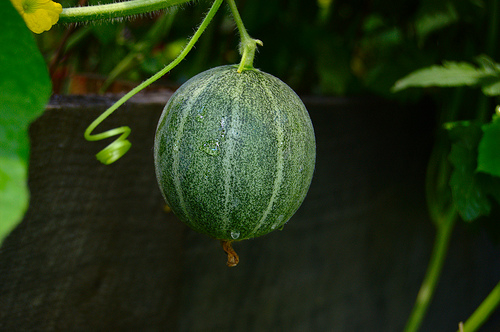
The best melons I grow outdoors are sown direct in a coldframe on top of a freshly made compost heap in late spring. In warmer regions than Britain, melons can be planted out where they like to ramble under sweet corn or sunflowers. On the ground, place young fruit on a piece of wood or tile to stop it rotting. Under cover, melons are usually trained up strong strings; the ripening fruits need to be supported in bags or nets.
Epicurean attentions:
Pick melons when they give off scent and the stalk will start to pull out. Chill for a day, or so, then gently warm just before serving.
Watermelons are even more difficult to grow than melons in a cold climate, but I just manage them in a heated coldframe and in my polytunnel. Watermelons are started much the same as indoor cucumbers and need similar conditions, but prefer a more open, gritty compost and need more sun and lots of water. They seem to be the ultimate spider mite attractant! Although not enormous, the home-grown fruit's texture and sweetness have amazed me. Try 'Sugar Baby' or 'Yellow Baby'.

How to Grow Cucumbers


Frame or indoor cucumbers need continuous warmth and moisture with a really rich soil for the best varieties, though there are some that will crop in warm, sunny frames in good seasons. Indoor cucumbers need sowing in pots in a heated propagator during late winter or early spring. Pot them up regularly until they are ready to plant in their final position. Take care not to let the neck, where the stem leaves the soil, get damaged or wet as it will easily rot. For this reason, cucumbers are best grown on a little mound of sterile compost. They trail like marrows, so can be grown up strong strings or wires. They must have continuous high temperatures, very high humidity and are prone to spider mite and mildew. Regular spraying with water and adding seaweed solution or nettle tea may help prevent downy mildew. 
If indoor cucumbers are allowed to pollinate, the resulting fruits are bitter, so remove all male flowers (those with no tiny cucumber behind them) before they open so that the females are not pollinated. Female varieties occasionally produce a male flower, so it pays to be vigilant. The seed is expensive, but given the warmth and rich conditions cucumbers give very quick results and are very productive early in the year, when other things are still weeks away.
Epicurean attentions:
Pick cucumbers early in the morning before they warm up for maximum crispness. 
Recommended varieties:
'Telegraph' is well known, 'Conqueror' which is tolerant of cooler conditions has long been popular for coldframes or unheated greenhouses. 'Pepinex 69' used to be my favourite but 'Carmen' and 'Aidas' are excellent and 'Petita' is superb! Melons are treated exactly the same as cucumbers, but need even more heat to keep them growing well. As with cucumbers, they will rot if the neck gets damaged or wet, so plant on a mound of sterile compost. Ideally, nip out the growing tip after four good leaves to produce side shoots. Later, in one go, pollinate one flower on each side shoot with a brush or cotton-bud to get even-sized fruits. Melons are even more prone to spider mite than cucumbers.


For more on growing cucumbers, click here.


Discover More with these Related sites:

More Tips on Growing Aubergines


Aubergines or eggplants are related to tomatoes, potatoes and peppers, and often grown with the latter as they like the same warm conditions. However, they should be kept away from tomatoes and potatoes. This is definitely a greenhouse crop and needs continuous warm, moist, rich conditions. Sow in pots in warmth in early spring and repot monthly, then plant under cover in early summer at two foot or so apart. Aubergines need tying to canes to support the crop. They are prone to red spider mite and aphid attacks.


Discover More with these Related sites:

Sweet Peppers and Chilli Peppers


Peppers, sweet and chilli are as easy to grow as tomatoes. In very sheltered, warm gardens they may even just succeed planted out of doors in southern Britain. Sow in pots, preferably in a propagator in early spring, repot monthly, plant under cover in early summer at a foot or two apart. They will need tying to canes to support the crop. Peppers even crop well in large pots under cover. They can get damaged by aphids early on, and watch for slug damage to ripening fruit.
Epicurean attentions 
Most varieties go red when ripe. Chillis are often hotter the smaller the fruits. Peppers dry and store remarkably easily.


Discover More with these Related sites:

Saturday, 4 December 2010

Growing Salad Plants

Salad Plants


When thinking of salads many people do not go further than lettuce, tomatoes, cucumber and radishes. This is a pity since there are many interesting, health-promoting plants which are easily grown. These add pleasing variety to a mixed salad as well as being most agreeable when used alone.
The majority are best eaten raw; one or two including endive and dandelion are bitter unless blanched, while some can be cooked. With a little planning, salad plants can be available throughout the year and there is no doubt that if more raw vegetables were used, with their higher vitamin content retained, we should be a healthier nation.


Discover More with these Related sites:

Growing Skirret - Sium sisarum

Skirret. Sium sisarum


This old fashioned vegetable produces semi-cylindrical white roots of a pleasing distinct flavour. It is grown and used similarly to salsify. It can be raised from seed, although since it is a perennial, the tuberous roots can be divided for replacing in the spring. Once the plants begin to deteriorate a fresh supply should be obtained by sowing seed in spring. 
Skirret does best in soil on the light side, and rich ground should be avoided. Roots are ready for use as required from early autumn onwards. Alternatively, the roots can be lifted in autumn and have their leaves twisted off before being stored in layers of sand or soil, either in boxes or trays kept in a cellar. 


Discover More with these Related sites:

Friday, 3 December 2010

Growing Scorzonera - Scorzonera hispanica

Scorzonera. Scorzonera hispanica
Very similar to salsify, this is preferred by many because of its flavour and its help in combating various forms of indigestion. Fertile soil, free from clods or stones ensures straight roots. Sow seed in the spring in drills 25 mm deep and 38cm apart. Thin the seedlings early, leaving strong plants 15cm apart. The plants are perfectly hardy and while roots can be stored in boxes of sand it is better to lift as required and cook without delay. 
Boil or steam the roots before peeling. The black skin is not easy to remove, the best way being to rub the roots in a cloth while they are hot. 


Discover More with these Related sites:

Growing Salsify - Tregopogon porrifolius

Salsify. Tregopogon porrifolius
This is a biennial plant, often known as the Vegetable Oyster because of its flavour. Not at all widely grown it is much in use as a winter vegetable in France and Italy. It likes a deep moisture retentive soil on the light side, preferably one enriched with decayed manure or compost the previous season. 
Sow seed in spring in drills 2cm deep and 30cm apart, and thin the seedlings to 15 to 18cm apart. The roots are ready for use in the autumn and may be lifted as required, being treated like parsnips. Do not damage them or they will 'bleed' and loose their nutty flavour. 
If some plants are left in the ground during the winter, young top growths can be cut and cooked in spring when they have an asparagus like flavour. The cream-coloured roots should be 15 to 23cm long and 5cm thick. They can be steamed or boiled in their skins, which are rubbed off, before being served with white sauce. Sandwich Island Mammoth is the best known variety.


Discover More with these Related sites:

Growing Rampion - Campunula rapunculus

Rampion. Campanula rapunculus
This is a little-grown biennial plant of which seed should be sown in early Summer. When the soil is in a fine workable condition, make the drills 30cm apart and thin the seedlings so there is 10 to 13cm between them. This plant likes plenty of moisture so a semi-shaded position should be chosen. If the roots become dry, the plants are liable to run to seed prematurely. 
The roots are hardy and can be dug as required, although it is wise to store a few in boxes of sandy soil in winter, so they are available should the ground be frozen at any time. The white fleshy roots are boiled and when tender, can be cut up for use in salads or be served with melted butter.


Discover More with these Related sites:

Growing Pumpkins

Pumpkin. Cucurbita moschata


This is a member of the marrow family and may be grown in the same way as the trailing marrows. They are easily raised from seed sown in the cool greenhouse or garden frame. Use 8 cm pots of good compost sowing two seeds in each. If both grow remove the weakest specimen. 
Alternatively, sow where the plants are to grow covering them with cloches, but watch out for slugs which seem attracted to the seedlings. Plant out into heaps of fermenting material. The flowers can be hand fertilised, and if the intention is to grow very large fruits then one should be allowed to develop on each plant. Smaller specimens can be gathered before the skin becomes iron-hard. If the aim is to secure giant pumpkins, plenty of liquid manure should be supplied over a period of weeks. 
The variety usually grown is Hundredweight  which produces huge orange fruits and which has often been the subject for special Pumpkin Competitions. 


Discover More with these Related sites:

Growing Okra - Hibiscus esculentus

Okra. Hibiscus esculentus
Often known as Gumbo and popular in the U.S.A. In view of our variable summer conditions, it is advisable to start the plants under glass except in warm districts. Although they grow a metre high in warmer places, elsewhere the plants rarely exceed 38 to 45cm The pale yellow flowers with purple centres are followed by curious long, tapering upright seed pods, which must be eaten within a few days of maturing otherwise they become tough. The okra served in restaurants is tinned and nothing like so good as fresh pods. 


Okra is not difficult to grow if a light, warm space is available. Treat it like aubergines. Unfortunately you need several plants to get enough to use, so it is not an awfully practical crop. Pick the pods while small to add their peculiar slimy texture to stews. It is best to sow the seed in the greenhouse, placing two or three seeds in a 13cm pot of sandy soil, reducing the seedlings to the strongest one. These can then be planted under cloches or in a warm situation. 


Discover More with these Related sites:

Orach - Atriplex hortensis -Montana Spinach

Orach. Atriplex hortensis
This is the Mountain Spinach and there are three forms; green, white and red, all growing 1-20m or more high. The red variety is not out of place in the flower garden, but should not be allowed to flower there, since it seeds itself freely and can become a nuisance. 
The young leaves are excellent in salads, while the older ones can be cooked like spinach. People who find the ordinary spinach indigestible can eat this type without discomfort. Seed can be sown thinly in moisture retentive ground during spring and early summer. Make the rows 45cm apart, and thin the seedlings early so that there is 38cm between them. 
It is best to gather some leaves from each plant rather than stripping individual plants bare. 


Discover More with these Related sites:

How to Grow Nasturtiums

Nasturtium. Tropaealum majus


Although well known as a flowering ornamental subject, the nasturtium is also of value as a salad plant. The leaves used when young and clean provide a piquancy which might otherwise be lacking, while the seeds can also be included in the salad bowl although they are rather hot. Not only are the flowers ornamental, but they can be eaten and seen arranged with other ingredients they provide a really bright and appetising display. 
Nasturtiums grow well on any ordinary, even poor soil. If given really good treatment they are apt to produce leafy growth at the expense of flowers. The large seeds can be sown individually 12 mm deep. Watch the plants  for aphis since these pests can soon make the plants look unsightly. A derris based insecticide will get rid of this trouble. 
There are many separate named sorts as well as mixtures and it is best to depend on the dwarfer bushy strains rather than the trailing or climbing forms.


Discover More with these Related sites: